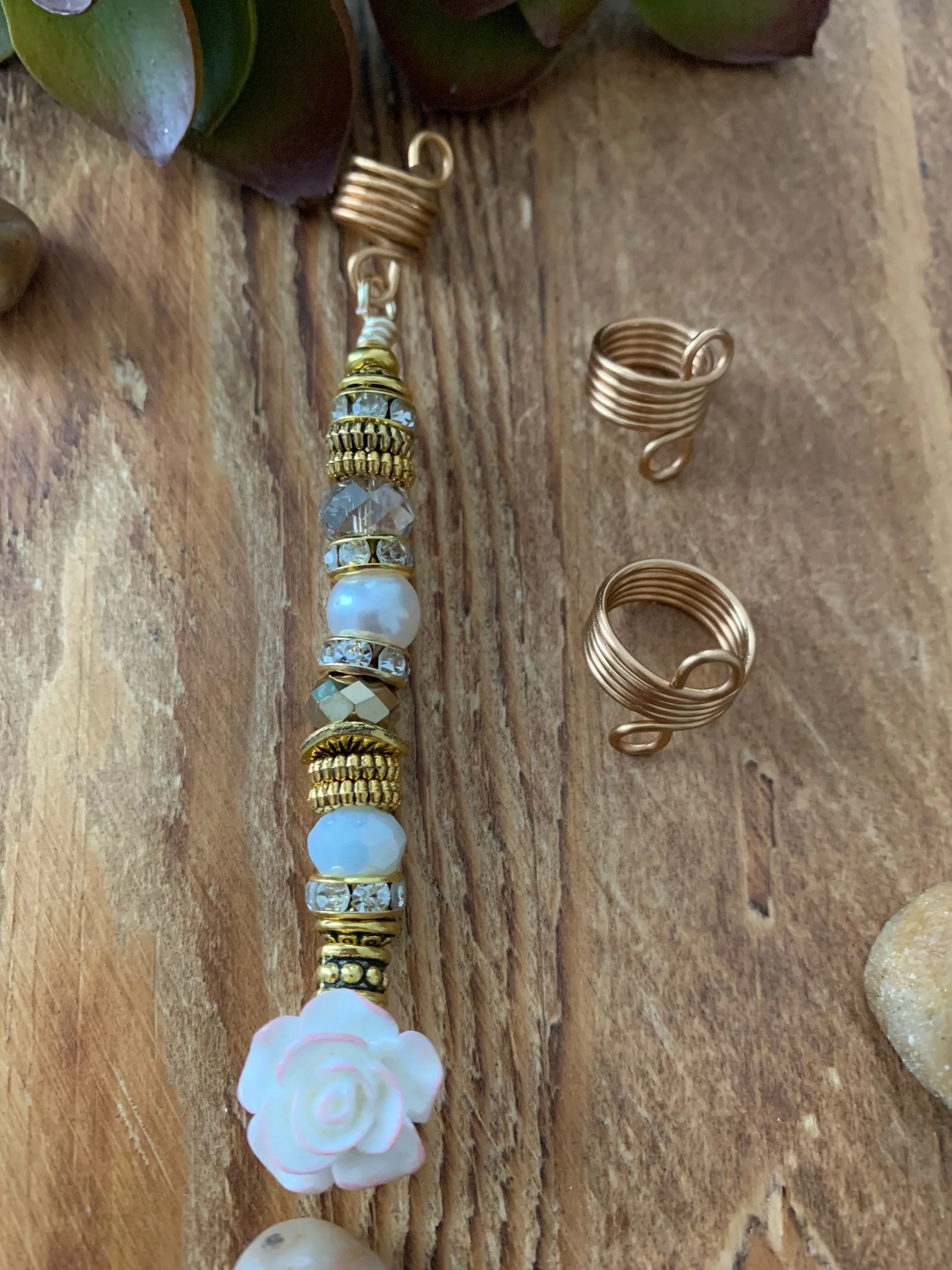
Loc cuffs are one of the easiest ways to change the mood of a familiar style. They can add a flash of gold near your face, bring a little rhythm through a side sweep, or make a bun feel dressed for the occasion. The best part is that you do not need a whole new retwist or a complicated arrangement to make them work. One well-placed cuff can be enough.
But a cuff only looks effortless when it fits. Too loose and it slips. Too tight and it is uncomfortable before you have even left the house. This guide walks through how to wear loc cuffs with a focus on fit, placement, and the small styling choices that make handmade details feel like part of your look, not an afterthought.
Know What a Loc Cuff Is Meant to Do
A loc cuff is a small decorative piece that wraps around a section of hair. Some are simple coils or bands. Others include beads, charms, stones, wire wrapping, or a focal pendant. Unlike a clip that needs to hold a large amount of hair in place, a cuff is there to decorate the loc. It should not be doing heavy lifting.
That is why the right fit matters more than squeezing harder. A cuff should follow the shape of the loc it is on and remain comfortable when you turn your head, pull on a top, or put on a scarf. Think of it as jewelry for your hair, not a tool for controlling it. When it sits naturally, the whole style reads cleaner.
Start by deciding whether you want a quiet accent or a focal point. A simple cuff is great for bringing a little shine to an everyday style. A larger charm or beaded piece can become the moment near the face, at the crown, or at the end of a side sweep. The rest of your choices get easier once you know which role the cuff is playing.
Choose a Size That Fits Without Pressure
The first question is not which color to buy. It is which size will sit comfortably on the loc you want to decorate. Look at that specific section of hair, not the average width of your whole head. Locs can be fuller at the root, slimmer through the length, and different from one section to the next. A cuff that feels right on one loc may be wrong for the next.
When a piece has size options, choose the measurement closest to the width of the loc rather than planning to force it smaller. Cyere's Closet cuff sets include options ranging from 2 mm and 4 mm for sisterlocks through larger 5 mm to 20 mm sizes. That range gives you room to find a piece that rests around your own locs instead of relying on pressure to hold it in place.
Use a simple fit check before you build the rest of the look. Hold the cuff where you want it, close or wrap it gently, then move your head and touch the loc around it. It should not feel sharp, pinched, or as though it is pulling the hair away from the scalp. If it shifts, try a slightly fuller point along the same loc. If it feels tight, choose a larger size or a different section.

Pick the Placement Before You Add More Pieces
Placement turns a handful of cuffs into a style. Before you add a second piece, choose the area that should lead. Near-the-face placement gives you a visible flash of color or shine every time you look in the mirror. A cuff at the crown makes a bun, half-up look, or pinned style feel more finished. One side of the head is perfect when you want an easy, off-center detail.
For an everyday look, begin with one cuff placed where it can be seen from the front or a slight turn of the head. For a fuller arrangement, use one focal area and let the other accents follow it. Two or three cuffs spaced along one side can create movement. A small group near the crown can draw attention upward. What usually works less well is spreading identical pieces evenly over every loc, because the style loses its point of view.
Take a quick photo from the front and both sides before you call it done. The camera is useful because it shows the overall balance at a glance. If your eye goes straight to the cuffs and not to the shape of your locs, remove one. The hair is the main event. The jewelry is there to underline it.
How to Put On Loc Cuffs in Four Simple Steps
- Start with clean, dry hands and a settled style. Add cuffs after you have finished most of your styling, so you are not constantly moving or adjusting them while you work.
- Choose the loc and the exact spot. Pick a stable section where the cuff has enough room to sit. Avoid a spot that is already under tension from a tight updo, a fresh edge style, or a scarf knot.
- Open or wrap the cuff gently. Guide it around the loc with a light hand. The cuff should close because the size is right, not because you are pressing it hard into the hair.
- Do a comfort and movement check. Turn your head, smile, reach for a jacket, and see whether the piece catches. If it pinches or snags, remove it and change the spot, size, or number of pieces.
This approach feels simple because it is. Most cuff problems come from trying to make one piece work everywhere. Taking a minute to choose the right section gives you a better result than tightening the cuff until it stays put.

Keep Comfort in the Style Conversation
Hair jewelry should be fun to wear, not something you notice all day because it hurts. The American Academy of Dermatology notes that repeated pulling from tight hairstyles can contribute to traction alopecia. That does not mean you have to give up the looks you love. It means discomfort is useful information. Loosen the style, choose a larger cuff, or move the piece to a section that is not already under strain.
Pay special attention around the hairline and any area that is freshly retwisted, braided, or pinned up. A cuff may be lightweight, but it can still add stress when it is combined with a tight style or a spot that is already tender. If you feel pulling, headaches, or scalp soreness, take the piece out. The AAD's guidance on hairstyles that pull is a helpful reminder that comfort belongs in every protective-style routine.
There is also no need to sleep in pieces that might catch on fabric or make you shift around at night. Taking cuffs out before bed, then storing them somewhere dry and easy to reach, keeps the routine easy. It also gives you a fresh chance to switch up placement the next day instead of wearing the same arrangement on repeat.
Make a Small Cuff Set Look Intentional
Matching does not require every cuff to be identical. Choose one thread that repeats, then let the pieces have a little personality. That thread might be a gold-tone finish, one bright bead color, a certain stone, or a handmade wood detail. The repeated element gives the look a plan. The variation keeps it from looking like a uniform.
A good starting formula is one focal charm plus two supporting cuffs. Put the focal charm where it has visual room, then add the quieter cuffs a few inches away on the same side or nearby at the crown. If the charm has color, let one cuff pick up that color and keep the other simple. If the focal piece is metallic, a small bead or wire detail can add texture without competing with it.
For a bolder style, work in clusters instead of covering every section. A cluster gives the eye somewhere to land. Empty space around it makes the detail look considered. This is especially useful with updos, side parts, and styles that already have a strong silhouette.

Common Loc Cuff Mistakes to Avoid
Forcing the wrong size. If a cuff will not close comfortably, it is not the right cuff for that loc. Go up a size, try another section, or choose a more open style of piece. Forcing it can make the detail feel heavy and take the ease out of the look.
Putting every piece in a straight line. Even spacing can be beautiful when you want a very structured result, but a loose row of identical cuffs can feel flat. Try a small shift in height, a cluster near the face, or one accent at the crown to create more movement.
Adding jewelry before checking the whole style. Your locs may already have plenty going on. Look at the part, the volume, and any twists or pinned sections before adding cuffs. The best choice may be one piece, not six.
Ignoring a snag. A cuff that catches on a scarf, collar, or your fingers will keep interrupting your day. Do not wait for it to become annoying. Move it, remove it, or save it for a style where it can sit more freely.
Style Cuffs for the Day You Are Having
For everyday wear, keep your starting point easy. One or two cuffs in a finish you already wear often can make a regular style feel finished without needing special attention. A small gold-tone coil near one side of the face, a simple cuff toward the end of a side sweep, or a pair placed near the crown all work when you want something that is low effort but still personal.
For a celebration, dinner, photos, or a day when you want your locs to carry more of the look, build the arrangement in layers. Start with the largest charm or the brightest detail. Add two or three cuffs that repeat one color or finish, then stop and check the balance. This gives you a statement without making every loc compete for attention. A cuff set with a charm can be especially helpful here because it already gives you a visual thread to follow.
There is no rule that says a bold piece only belongs to a special occasion. The better question is whether the placement works with your day. If you will be wearing a high collar, a hat, a headset, or a scarf, choose cuffs that sit clear of those friction points. When a piece has room to move and show its detail, you will enjoy wearing it more.
Find Your Starting Point at Cyere's Closet
Cyere's Closet makes handmade cuffs and charms for locs, braids, twists, and the styles that deserve a little more personality. If you want a straightforward place to start, the Sun Catcher charm set gives you a simple way to add a small detail. For more color and a coordinated look, explore the Wishing for Roses set, then choose just one or two pieces to lead the arrangement.
For a more noticeable focal point, a rose-etched gold accent gives you a clear detail with room to style around it. You can also browse the full loc jewelry collection when you are ready to find the colors, symbols, and handmade details that feel most like you.
Wear the cuff that fits. Give it room to shine. Then let the rest of the style follow.
Frequently Asked Questions
How tight should loc cuffs be?
A loc cuff should sit securely without pinching, pulling, or leaving your scalp tender. Choose the size that rests around the loc naturally, then stop. A cuff that needs force to close is not the right fit for that section.
Can I wear loc cuffs on sisterlocks?
Yes, provided you choose cuffs sized for the width of your sisterlocks and use a light touch when placing them. Start with one small cuff on a stable section, then check that it stays comfortable as you move through the day.
Where should I place loc cuffs?
Place cuffs where you want the eye to land: near the face for a visible detail, along one side for a relaxed asymmetrical look, or near the crown to give an updo more dimension. Leave enough space between cuffs for the style itself to show.
Do I need matching loc cuffs?
No. A repeated finish, color, or material is enough to make different cuffs feel connected. Let one detail lead, then use one or two quieter accents to support it instead of trying to match every piece exactly.