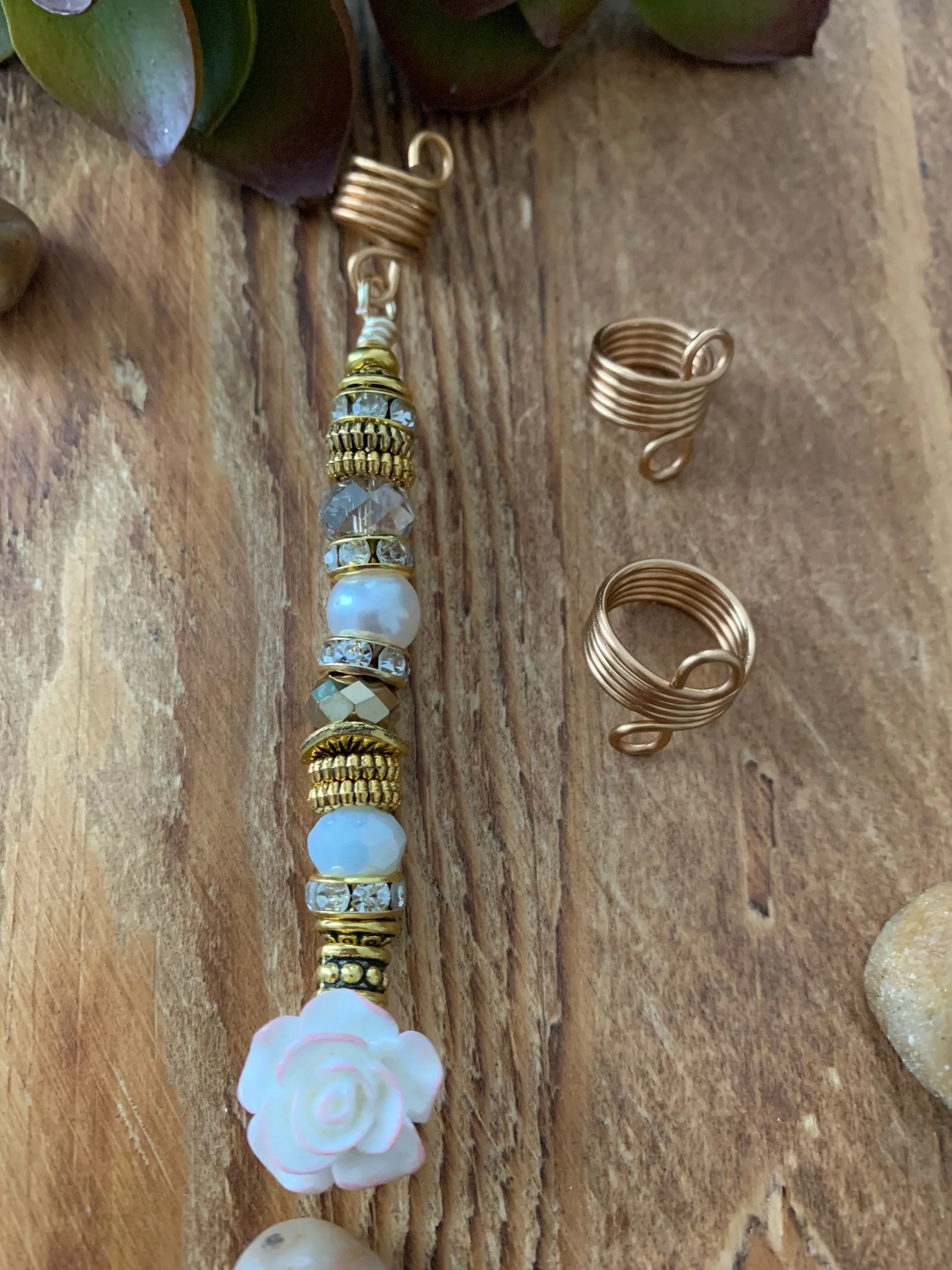
Hair charms can change the mood of locs or braids without changing the whole style. One small symbol near the face can make a retwist feel fresh. A few charms at the crown can give an updo more personality. A colorful handmade accent can turn a simple side sweep into the detail people notice first.
The secret is not piling on more pieces. It is choosing a charm that fits the section you want to highlight, placing it where it has room to show, and making sure it stays comfortable through the day. This guide walks through how to wear hair charms in locs and braids so the finished look feels expressive, balanced, and easy to live in.
Start With One Detail You Actually Want to Show Off
Before you decide where a charm should go, decide what kind of presence you want it to have. A small metallic charm can be an everyday detail. A hand-painted focal piece can carry a more colorful look. A symbol, leaf, moon, or meaningful shape can make the style feel personal without needing an explanation.
Pick one piece to lead first. That choice gives you a direction for everything else. If the charm is bright, keep the surrounding details quieter. If it is a subtle gold-tone accent, you can repeat the finish with one or two small cuffs or beads. Starting with one clear idea keeps the result from feeling like every piece is trying to be the star.
It also makes getting dressed easier. Instead of standing in front of the mirror with a handful of accessories, choose the one charm that fits your mood, outfit, or plans. Then let your hairstyle decide where it belongs. The charm should add to the shape your locs or braids already have, not work against it.
Choose a Charm That Fits the Section of Hair
Hair charms are not one-size-fits-all. Locs can vary in width from one part of the head to another, and braids can be fuller at the root or slimmer through the length. Look at the exact section you want to decorate before choosing a charm. A larger statement piece needs a fuller, stable section with enough visual room around it. A small wire-wrapped accent can work beautifully on a more delicate loc or braid.
Pay attention to the way the piece attaches. Some charms wrap, some use an opening, and some sit within a cuff-style detail. Use the closure only as the piece is meant to be used. You should not have to bend a charm repeatedly, press it hard into the hair, or tighten it until the loc feels trapped. The right fit holds with a light touch.
When you are unsure, test one charm at home first. Put it on, move around, pull on a top, and see whether it catches or shifts. A short trial tells you more than trying to build a full look before you know how the piece feels. Once you find the charm and placement that work well together, you have an easy starting point for future styles.

Pick the Placement Before You Add More
Placement is what makes hair charms look styled instead of scattered. Choose one focal area first: near the face, at the crown, on a side sweep, or toward the back of an updo. Put the main charm there, then look at the style from the front and both sides. That quick check shows whether the hair already has enough detail or whether it needs one quiet supporting accent.
Near-the-face placement is a good choice for a charm with color, movement, or a meaningful symbol because it is easy to see in conversation and photos. Crown placement works well for buns, half-up styles, and pinned looks because it draws the eye upward. A side placement can feel relaxed and personal. A charm farther down a longer loc can create movement without crowding the hairline.
Leave some breathing room around the focal point. Locs and braids already have their own rhythm, texture, and shape. A charm looks more intentional when the eye has room to land on it, then travel through the rest of the style. If you add another piece, make it clearly smaller, simpler, or farther away from the first one.
How to Wear Hair Charms in Four Simple Steps
- Settle the hairstyle first. Finish your part, retwist, braid pattern, bun, or side sweep before adding charms. You will make fewer changes once the hair already has the shape you want.
- Choose one stable section. Pick a loc or braid that is not already being pulled by pins, a high ponytail, a scarf, or a tight edge style. The charm needs room to sit naturally.
- Attach the charm with a light hand. Slide, wrap, or close it only as the design calls for. If it resists or needs force, choose another section or a different piece instead of pushing through.
- Do a movement check. Turn your head, reach for a jacket, and gently touch around the piece. If it snags, pinches, or constantly shifts, move it before you add anything else.
Adding one charm at a time gives you a chance to see the style develop. It also prevents a common mistake: placing several accents in the same area before you know which one should be the focal point. Give the first charm the chance to do its job. Often, that is all the style needs.

Let Comfort Decide What Stays In
Good hair jewelry should never require you to ignore discomfort. If a charm makes a loc or braid feel pulled, catches every time you turn your head, or sits against an already tender area, change the placement or take it out. A piece can be beautiful and still belong on a different section of hair or a different style.
The American Academy of Dermatology explains that repeated pulling from tight hairstyles can contribute to traction alopecia. That is a useful reason to treat soreness as information, not a price you have to pay for the look. Keep charms away from tight hairlines and use extra care on a fresh retwist, a close braid pattern, or any style that already feels snug. Their advice on hairstyles that pull is a good reminder that the most wearable details are the ones your hair can comfortably carry.
Think about the real day you are having, too. A charm that looks great for dinner or photos may not feel as easy under headphones, against a high collar, or beneath a hat. Place it away from those friction points when you can. For sleep, remove any piece that could feel bulky or catch on fabric, then keep it in a dry place where it is easy to find in the morning.
Build a Color Story, Not a Matching Uniform
Different charms can look like they belong together without being identical. Pick one thread that repeats: gold-tone wire, a deep purple bead, warm wood, a single crystal color, or a black-and-gold detail. That thread gives the look a plan, while the differences keep it from feeling too neat or predictable.
A simple formula is one focal charm plus one or two smaller accents. Let the focal piece carry the strongest color or shape. Use the supporting pieces to repeat one element from it, then stop. A colorful charm near the face with two subtle gold details farther along one side can feel more complete than six matching pieces spread across the whole style.
Outfits can guide the choice, but they do not need to control it. Pull one shade from a print if you want everything to feel connected. Pair a bright charm with a simple outfit when you want your hair to carry the color. On days when your clothing already has a lot going on, a small metal or wood detail can be enough to make the style feel finished.

Give Each Charm a Job
When you wear more than one piece, decide what each one is doing. The focal charm is the detail people notice first. Supporting charms repeat a color, finish, or texture nearby. A small hidden accent can be a private detail that shows when you move. Thinking this way helps you avoid adding pieces just because you have them.
Clusters work especially well for a fuller celebration look. Keep them in one area instead of placing a charm on every loc. A small cluster near the crown can make a bun feel special. A group along one side can add movement to a side sweep. Leave the rest of the hair open so the pattern, volume, and shape stay visible.
For an everyday look, scale it back. One charm placed where it will not snag can make a familiar style feel fresh. This is also an easy way to learn your preferences. You may find that you love a symbol near the face but prefer beads at the crown, or that a larger handmade piece feels best on days when your locs are worn down. There is no need to follow a formula that does not fit your routine.
Common Hair Charm Mistakes to Avoid
Forcing a charm onto the wrong section. If the opening feels too small or the wrap needs pressure to stay closed, choose another loc, braid, or charm. A secure piece should not feel tight.
Putting every accent at the hairline. Near-the-face placement can be beautiful, but crowding that area can make the look feel heavy and add stress where hair is often more delicate. Spread the visual weight through the style.
Skipping the movement check. A charm may look perfect in a still mirror and catch the minute you put on a jacket. Turn your head, touch your shoulder, and move around before you leave.
Trying to match everything exactly. One repeated material or color is usually enough. Let handmade pieces have a little variation. That is part of what makes the style feel personal.
Find a Starting Point at Cyere's Closet
Cyere's Closet makes handmade charms, cuffs, beads, and wire-wrapped details for locs, braids, twists, and protective styles that deserve a little extra personality. A hamsa loc accent is an easy choice when you want one meaningful focal point. The Good Karma elephant charm set gives you three connected details to wear together or separately.
For a color-forward look, explore the RoyalAura adornment set, then let one piece lead. You can also browse the complete loc jewelry collection for charms that fit your own color story. For more help with fit and placement, the Journal's loc cuff guide and beads on locs guide offer useful next steps.
Start with one charm you love. Place it with care. Let the rest of the style make room for it.
Frequently Asked Questions
How do hair charms stay in locs?
The right charm stays in place because its opening, wire, or wrap suits the width of the loc. It should rest securely with a gentle closure, never from being forced or squeezed tightly around the hair.
Can I wear hair charms on braids?
Yes. Choose a charm that suits the thickness and finish of the braid, then place it where it will not rub against a tight style, scarf, collar, or the hairline. Start with one piece before building a fuller look.
Where should I put hair charms?
Place a focal charm near the face, at the crown, or along one side of the style, then leave enough open space for the shape and texture of the hair to show. A small, intentional cluster often has more impact than a charm on every section.
Should I take hair charms out at night?
Remove pieces that feel bulky or could catch on bedding before you sleep. Keeping them in a small dry dish or organizer makes them easier to enjoy again the next time you style your hair.