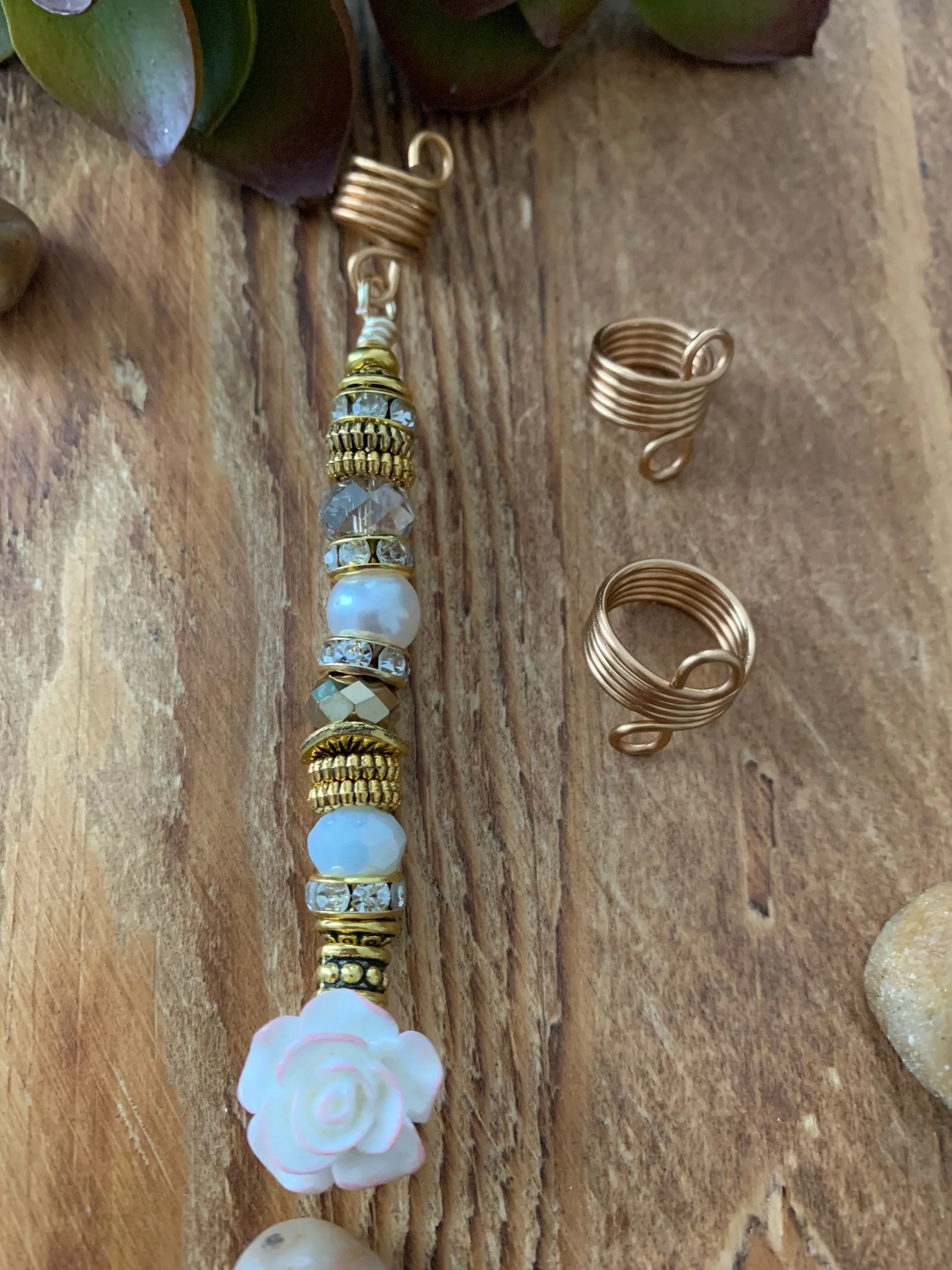
Braid accessories are one of the easiest ways to make a familiar style feel newly yours. A gold cuff can catch the light in a clean row of braids. A painted charm can bring color to a simple middle part. A small cluster near the face can change the whole mood without asking you to redo the style underneath it.
There is no single right way to decorate braids. The pieces that work best are the ones that suit the braid size, feel comfortable through a real day, and give the eye a clear place to land. This guide walks through what to choose, where to place it, and how to build a look with enough personality to feel intentional, not crowded.
Start With the Style You Already Have
Before you reach for accessories, look at the braid pattern. Clean parts, feed-in braids, knotless braids, twists, cornrows, and a braided updo each create their own lines and rhythm. Your accessories should follow that shape instead of competing with it. A neat, detailed style may only need one or two accents. A simpler style can carry a stronger focal piece or a small color story.
Choose the area you want people to notice first. Near-the-face placement makes an accessory visible in conversation and photos. A piece at the crown gives height to a bun or half-up look. An accent along one side feels relaxed and a little unexpected. Placing jewelry lower down lets a longer braid move and catch the eye. Once you decide on that focal area, the rest becomes much easier.
It also helps to think about the day ahead. If you will wear a headset, a high collar, a scarf, or a hat, keep the first accessory away from that friction point. Good braid accessories should feel like part of your style, not like something you have to keep checking every ten minutes.
Choose the Type of Braid Accessory by Its Job
Accessories do different jobs, and knowing which one you want saves you from buying or wearing more than you need. A cuff or coil is excellent for adding a clean metallic detail. Beads bring color, texture, and a little movement. Charms carry shape and meaning, so they work well as a focal point. A set can make a fuller style easier because the pieces already share a finish, color family, or material.
Start with the lightest option that gives you the look you want. A small coil can add just enough shine for everyday wear. A handcrafted charm can take the lead for a birthday, dinner, photo day, vacation, or fresh appointment. If you want to mix pieces, repeat one thing: a gold tone, a jewel color, a bead shape, or a symbol. That small thread makes the look feel considered even when every piece is not identical.
Avoid choosing based on the name alone. What matters is whether the opening or wrap works for the braid you plan to decorate. A piece that looks perfect on a product photo can still be wrong for a very small braid, a fuller braid, or a section that already has tension. Check the individual braid you want to use, then choose the piece that can sit there naturally.

Fit Comes Before a Finished Look
The prettiest accessory is not worth forcing. A cuff, bead, or charm should stay in place without a hard squeeze, repeated bending, or pressure that makes the braid feel tight. Start by holding the piece beside the braid you want to decorate. If it needs force to go on, it is not the right fit for that spot.
After placing it, do a quick movement check. Turn your head, lift your shoulders, put on the jacket or scarf you expect to wear, and touch the braid around the accessory. It should not pinch, snag, or shift constantly. If it does, move it to a fuller section, choose a lighter piece, or leave that area open. Space is a styling choice too.
This matters most around the hairline and any braid that already feels secure or tender. The American Academy of Dermatology advises that hairstyles which pull can lead to traction alopecia, and recommends loosening braids when they create tension. Its guidance on hairstyles that pull is a useful reminder that pain is not part of a good finish. If the style or the accessory hurts, adjust it.
Build a Look in Layers, Not All at Once
The quickest route to a polished result is to place one piece, then pause. Put the focal charm, cuff, or bead cluster where you want the eye to land. Step back from the mirror and look from the front and both sides. If that first detail already gives the style what it needs, you are done. If it needs support, add one or two quieter pieces that repeat the same color or finish.
- Finish the braid style first. Let the parting, length, and shape settle before adding jewelry.
- Place the focal piece. Choose one stable braid with room around it and add the detail you are most excited to wear.
- Repeat one element. Add a smaller cuff, bead, or coil only if it echoes the focal piece in color, metal, texture, or mood.
- Leave breathing room. Keep open space between details so the braid pattern stays visible and the accessories can actually stand out.
Clusters tend to look stronger than scattering the same small accessory everywhere. A cluster gives the eye a destination. Intentional symmetry can be beautiful too, especially with a center part, but keep it clear and deliberate. If every braid gets a detail, the finished look can lose the shape that made the braid style special in the first place.

Use Color and Meaning to Make It Personal
The most memorable braid accessories usually have a point of view. That might be a favorite color, warm metal beside the jewelry you wear every day, a symbol that means something to you, or a hand-painted piece that turns a simple style into a conversation starter. You do not need a matching set from head to toe. You need one detail that feels true to your style, then enough support around it to make it feel at home.
For an easy everyday look, repeat a finish you already wear. Gold-tone cuffs can connect with hoops, rings, or a watch. Earthy wood, bronze, or warm beads can work beautifully with neutral clothes. For a bolder occasion, let one charm carry the color, then use quieter supporting pieces nearby. If your outfit is already busy, keep the braid jewelry simple. If the outfit is understated, your hair can take more of the spotlight.
Handmade pieces are especially useful here because they can bring texture and character without needing a long list of accessories. A painted wood charm, wire-wrapped detail, or colorful glass bead does not have to match perfectly to belong together. It just needs a little room to be seen.
Three Easy Braid Accessory Looks to Try
The everyday accent: Choose one small cuff or charm in a finish you already wear, then place it near one side of the face or on a braid that naturally falls forward. This works when you want the style to feel finished without changing the entire mood. It is also the best way to test a new piece because you can notice how it sits during your regular routine.
The coordinated cluster: Start with one focal charm, then add two smaller cuffs or beads close by. Keep the pieces in one area, such as the crown or a side sweep, rather than spreading them across every braid. A cluster gives the eye one strong destination and leaves the rest of the style calm. This is a good choice for a fresh braid appointment, dinner, or a weekend when you want more detail without a full statement look.
The color-led statement: Pick one color from your outfit, makeup, nails, or favorite jewelry and make it the thread through your hair accessories. Use a painted charm or beaded detail as the lead, then repeat that color once or twice in smaller pieces. The effect feels expressive because the color has a job. It is not about matching every item exactly, it is about giving the eye a clear connection to follow.
Whichever approach you choose, take one photo before you leave. A picture makes it easier to see whether the accessories are reading as a deliberate detail or whether one piece would look stronger on its own. It also helps you remember the combinations that felt most like you, so getting ready next time takes less experimenting.
Keep Braid Accessories Comfortable for Your Real Routine
Think beyond the mirror before you leave. Headphones, car headrests, sleep wraps, collars, and bags can all change how an accessory feels. A charm that looks beautiful for a photo may be better saved for a day when it will not catch on your routine. Smaller, lighter pieces often make the best daily rotation because they give you detail without asking for constant attention.
Take accessories out before bed when they could catch on fabric or feel bulky. Store them somewhere dry and visible, such as a small tray or dish near where you get ready. That makes your favorites easier to wear again, and it keeps delicate details from ending up tangled at the bottom of a drawer.
Check the style after a few hours, especially the first time you wear a new piece. The American Academy of Dermatology also notes that pain, stinging, or visible tension are signs to change a style. Its hair care guidance reinforces the same practical rule: a style that pulls too hard needs to be loosened. Remove or reposition an accessory that makes a braid feel different from the rest.

Find Your Braid Accessories at Cyere's Closet
Cyere's Closet makes handmade jewelry for locs, braids, twists, and protective styles that deserve more than a generic finishing touch. The Goddess Loc Braid Jewelry Set makes it easy to begin with one charm and a few supporting cuffs. For a lighter first step, the Sun Catcher set gives you a coordinated trio to place across a style.
If you want the accessory itself to carry the story, a hand-painted Heritage Vibes charm adds color and handmade character to one chosen braid. Explore the complete Braid Jewelry collection when you are ready to find a detail that feels like yours. For more placement ideas, the Journal's hair charm guide and loc cuff guide are useful next reads.
The goal is not to add everything at once. Pick one piece you love, give it a good placement, and let the braids do the rest, beautifully and comfortably.
Frequently Asked Questions
What accessories can you put in braids?
Braids can be styled with lightweight cuffs, beads, charms, coils, rings, wraps, or a small focal piece. The best choice depends on the braid size, the placement, and whether the accessory stays comfortable while you move through your day.
How do you keep braid accessories from falling out?
Choose a piece that fits the individual braid without force, place it on a stable section, and check it after normal movement. If it slides, move it to a fuller section or choose an accessory with a more suitable opening instead of squeezing it tight.
Can braid accessories damage your hair?
Accessories should never pinch, pull, catch, or make the style painful. Keep the look lightweight, avoid adding tension near the hairline, and remove or reposition any piece that feels uncomfortable.
How many braid accessories should I wear?
Start with one focal piece or a small cluster. Add only enough supporting details to repeat a color, material, or mood. Leaving space between accessories lets the braid pattern remain part of the finished look.