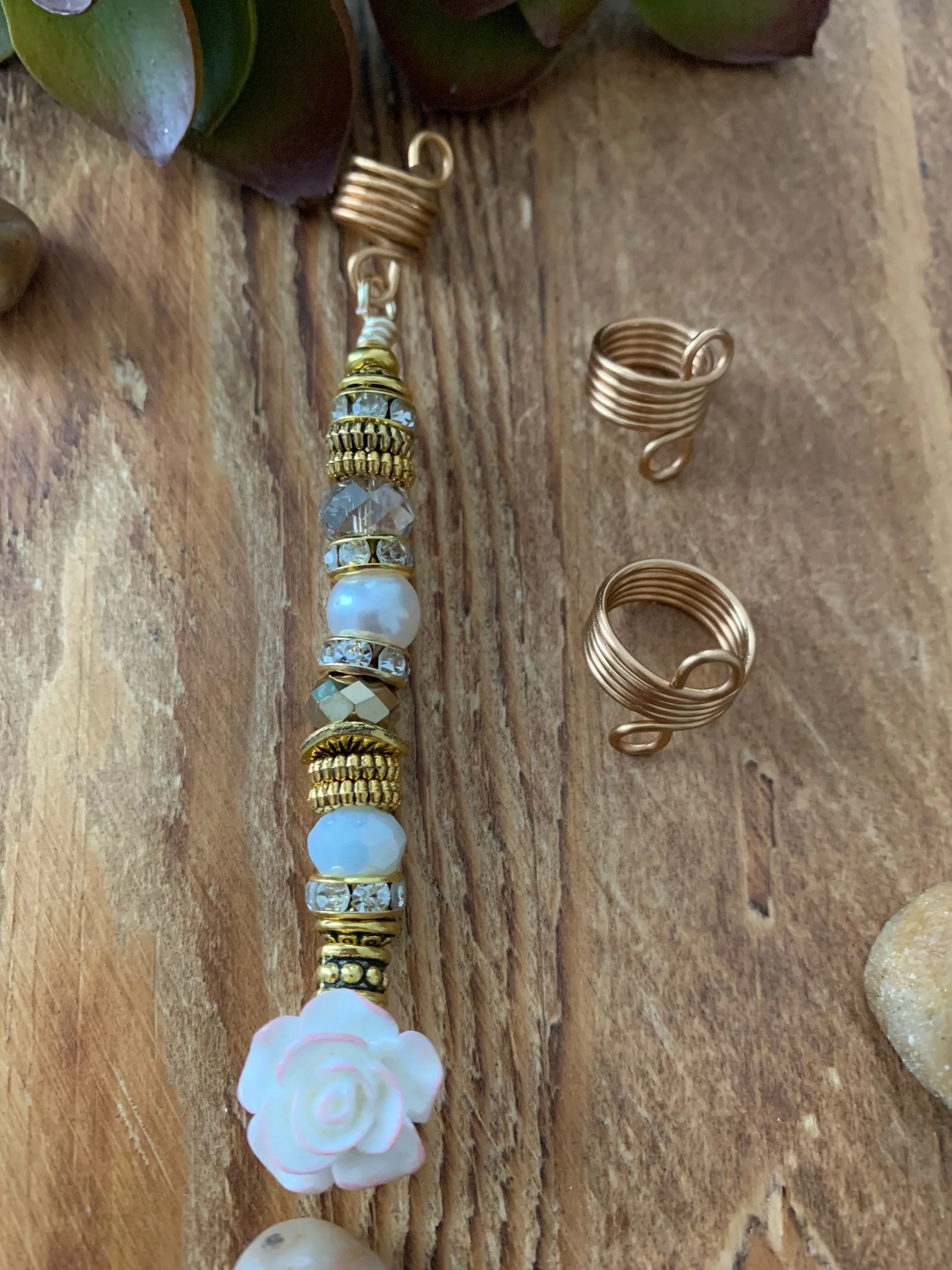
A loc ponytail can be the quickest way to clear your face, show off your neckline, and make an everyday look feel put together. The beauty of it is range. The same set of locs can read sporty in a soft mid ponytail, polished in a low one, playful at the crown, or ready for a night out with a few handmade details.
The goal is not to pull everything as tight as possible. It is to choose a placement that suits your length, density, and plans for the day, then add only the finishing details that make the style feel like yours. These loc ponytail styles are easy to adapt whether you want a low-key routine, a fresh-appointment look, or something with a little more presence.
Choose Your Ponytail Height Before You Choose the Details
Ponytail height changes the whole silhouette. A high ponytail lifts the eye and makes the face feel open. A mid ponytail feels relaxed and balanced. A low ponytail at the nape can look sleek and intentional while giving the hairline a break. Before reaching for a tie, stand in front of the mirror and hold your locs at each point. The position that feels best usually gives you the strongest starting point.
Length and weight matter here. Shorter locs can look great in a half-up ponytail or a smaller gathered style. Medium-length locs often have the most flexibility. Long or thick locs can become heavy when they sit high, so a mid or low placement may be easier to wear for a full day. There is no rule that says a ponytail has to be high to look special.
Comfort gets the final vote. The American Academy of Dermatology cautions that styles which pull can contribute to traction alopecia, so a secure style should never sting, throb, or leave your scalp feeling stretched. Its guidance on hairstyles that pull is a useful reminder that tension is not a styling requirement.
1. The Soft Mid Loc Ponytail
A mid ponytail is the easygoing option that works for errands, work, travel, and any day you want your locs out of the way without making them disappear. Gather the locs around the middle-back of your head, just high enough to keep the shape lifted but low enough to avoid a hard pull at the front. Let a few locs fall naturally if that feels like you, or keep the front neat for a cleaner outline.
This style is especially good when your locs have real weight. It distributes that weight more evenly than a high ponytail and tends to stay comfortable under a jacket collar or headrest. A covered elastic, soft tie, or gentle hair band is usually kinder than anything narrow that bites into one section. When you take it down, your scalp should feel normal, not relieved.
To make a soft mid ponytail feel intentional, choose one visible area for detail. A small charm on a loc that falls forward, or two matching accents on one side, creates a focal point without needing a full set. If you enjoy color, let the accessory pick up a tone from your top, lipstick, or earrings.

2. The Low Ponytail With a Clean Part
A low loc ponytail is a quiet power move. It works with a middle part, side part, or no visible part at all, and it makes the natural line of the locs feel like the main event. This is the style to choose when you want something elegant without asking your hair to do too much. It also pairs beautifully with a statement earring because the neckline stays open.
Begin by deciding where the front should sit. If you love a centered look, make the part clean and let it guide the ponytail. If you prefer more softness, sweep the front to one side and gather the rest at the nape. Do not chase a perfectly flat finish if it requires tugging. A little natural texture often looks better than a style that feels forced.
For a polished base, wrap one loose loc around the tie only if it sits comfortably. Secure it gently and check the look from both sides. Then choose whether it needs one accent. A gold-tone cuff near the base can echo your jewelry for the day. A colorful charm placed lower on the ponytail can add movement when you turn your head. Leave the rest open so the shape stays clear.
3. The High Ponytail, Kept Gentle
High loc ponytail styles have instant energy. They open the face, show off the length of the locs, and can make a simple outfit feel more dressed. The trick is placing the ponytail near the crown rather than forcing it toward the front hairline. That keeps the lift while reducing the feeling that everything is being pulled in one direction.
Gather in stages instead of yanking all your locs into place at once. Use your hands to smooth the shape, then secure it with enough hold to keep the ponytail stable. If it is your first time wearing the style for the day, move your head, smile, look down, and put on the jacket or scarf you expect to wear. Those simple motions reveal whether the placement is genuinely comfortable.
High styles are best treated as part of a rotation. The American Academy of Dermatology's practical hair-care tips recommend loosening styles that hurt and changing up styles that pull. If the crown feels tender or your edges feel strained, switch to a lower placement. The style can still be bold without being tight.
4. The Half-Up Ponytail for Shorter or Growing Locs
A half-up loc ponytail gives you the lifted feeling of a ponytail while keeping the lower locs loose and free. It is a strong option for shorter locs, locs that are growing out, or days when a full gathered style feels like too much. Start by selecting the upper section that naturally frames your face, then secure it at the crown or just below it.
The visual balance matters more than the amount of hair in the ponytail. Try a smaller top section first, then add a little more only if the style needs it. The lower locs create movement, while the upper section gives the look a clear shape. A side part can make it softer. A center part can make it more sculptural. Both work, so choose what feels natural when you look straight ahead.
Accessories have room to shine in this style. Put a single charm close to the tie, where it marks the change between the gathered and loose sections. Or add two small cuffs near the face and leave the rest of the locs bare. This is a good place to remember that open space is part of the design, not a missed opportunity.

5. The Side-Swept Ponytail
A side-swept loc ponytail is an easy way to change the mood without changing the whole method. Gather the locs slightly behind one ear and let the length fall over the shoulder you want to feature. It can feel soft and romantic for dinner, photos, or a special event, but it also works as a simple everyday choice when you prefer your locs to fall to one side.
The side you choose can be practical. If you usually carry a bag on one shoulder or wear a headset on one side, place the ponytail on the other so it is not constantly pushed around. Check the profile in the mirror before you leave. You want the tie to sit behind the ear, not so far forward that the shape looks accidental or pulls at the temple.
Use the side sweep to make one detail memorable. A handcrafted charm near the shoulder is easy to see and moves naturally with the ponytail. A subtle cuff closer to the base can support it. Keep the color story simple, perhaps one warm metal or one jewel tone, so the accessory feels like a chosen finishing touch rather than a distraction.
6. The Wrapped-Base Ponytail
Sometimes the smallest adjustment changes everything. Wrapping the ponytail base with one loc can hide a tie and make a casual ponytail look more finished. It works with high, mid, low, and side placements. Choose a loc that has enough length to circle the base without being pulled tight, wrap it once, and secure it gently where it will not poke or snag.
Do a comfort check after the wrap is in place. The base should still feel flexible. If the wrapped loc makes the tie feel tighter, leave it out and choose a cuff or charm instead. A good style detail earns its place by improving the look without making the style harder to wear.
This is also an easy place to coordinate your hair accessories. You can keep the wrapped base simple and add a focal charm lower on the ponytail, or use a small cluster of cuffs near the base. Try not to do both unless the occasion calls for a fuller statement. The best finishing details leave your locs visible.

How to Add Jewelry Without Overcrowding the Style
Think of jewelry as the punctuation, not the entire sentence. Start with the ponytail shape, then pick one place where the eye should land: near the face, at the base, or toward the shoulder. Place the focal piece there first. Step back, turn your head, and decide whether the style already feels complete. Often it does.
- Choose one focal piece. A charm, colorful bead, or hand-painted detail gives the eye a destination.
- Repeat one element, if needed. Add one or two smaller cuffs in the same finish or color family, close enough to feel connected.
- Leave room around the details. Space lets the ponytail shape and the individual pieces both read clearly.
- Check your real routine. Put on the layer, bag, or headphones you expect to use and move normally before calling the look done.
For daily wear, lighter pieces are usually the easiest choice. If an accessory catches, slides, or changes how the ponytail feels, move it or take it out. Medical references describe traction-related hair loss as a result of persistent pulling force, which is another reason to treat discomfort as useful feedback instead of something to style through. The National Library of Medicine overview of traction alopecia explains why reducing repeated tension matters.
Make Your Loc Ponytail Last Through the Day
A ponytail does not need to be frozen in place to last. Start with a clean, comfortable foundation and plan for small adjustments. If the base gets fuzzy later in the day, smooth it lightly with your hands instead of adding more tension. If the tie shifts, reset it before it becomes tight. If your scalp feels tender, let the style down or choose a lower placement.
At night, remove jewelry that could catch on fabric or feel bulky, and loosen the ponytail if it is not comfortable to sleep in. Store your charms and cuffs somewhere dry and visible, such as a small dish near where you get ready. That makes it easier to use the pieces you love instead of saving them for a vague future occasion.
The best ponytail is one you can forget you are wearing until someone compliments it. When the base is comfortable and the details are purposeful, it gives you the practical ease of a pulled-back style without losing any of the character that makes your locs yours.
Find Handmade Details for Your Next Ponytail
Cyere's Closet makes handmade pieces for locs, braids, twists, and the styles that carry you through a real day. A Crimson Swirl set is a color-led choice for a ponytail that needs one clear focal point. For a lighter, nature-inspired accent, the Whispers of Flight set gives you an easy way to add handmade character near the face or base.
If you want your ponytail to carry a brighter story, explore the Color Splash wood charms. For warm stone and shell detail, the Golden Seas loc jewel can stand on its own. Browse the full Loc Jewelry collection when you are ready to find a piece that feels like yours.
For more placement ideas, the Journal's loc cuff guide, hair charm guide, and loc jewelry style guide are useful next reads. Pick one detail, give it room to shine, and let your ponytail do the rest.
Frequently Asked Questions
What is the most comfortable loc ponytail placement?
A mid or low ponytail is often the most comfortable because it asks less of the hairline than a very high ponytail. The best placement is the one that feels secure without pulling, stays balanced as you move, and does not leave your scalp sore.
Can I wear a high loc ponytail every day?
It is better to rotate a high ponytail with lower or looser styles, especially if your scalp feels tender. Keep the tie gentle, avoid placing it in the exact same spot every day, and loosen it as soon as it feels tight.
How can I make a simple loc ponytail look more styled?
Start with a clear placement and a neat base, then add one intentional detail. A wrapped base, a small cluster of cuffs, or one colorful charm can make the look feel finished without hiding the shape of your locs.
Where should I put jewelry on a loc ponytail?
Place a focal charm where the ponytail is easy to see, such as one side near the face, the base, or the first few locs that fall forward. Keep the hairline comfortable and leave space between accents so each piece can stand out.