Short locs have their own kind of confidence. They show off your parting, texture, face, and the little details that can disappear once your hair gets longer. The trick is not trying to force them into a style that needs more length than you have. It is choosing a shape that works with where your locs are right now, then giving that shape one thoughtful finishing touch.
These short loc styles are built for real mornings, not just a saved photo. Each one can be adjusted for your length, loc size, and routine. Start with the style that feels most natural in your hands, keep tension low, and let your locs lead the way.
Choose your shape before you add detail
With short locs, the overall outline does most of the work. Before reaching for a tie, pin, or accessory, look at where your locs naturally part and where they land around your face. A deep side part can create more drama than a complicated updo. A little lift at the crown can change the whole feeling of a simple retwist. This is good news: you do not need length to make a deliberate choice.
Pay attention to comfort as you decide. The American Academy of Dermatology warns that repeated pulling from tight styles can stress the hair and scalp. If a style stings, pulls at the edges, or makes you feel relieved when you take it down, it is not the right version for today. A softer anchor or a smaller section often gives you the same look without the strain.
1. Let a clean part set the mood
The simplest short loc style is often the one that lets the locs stay down. Try a center part for a calm, balanced outline, a side part for softness, or a deeper part for more contrast. Use your hands to settle the locs where they naturally want to fall instead of pressing every section into place. This works especially well right after a retwist, when the parting itself has a crisp graphic quality.
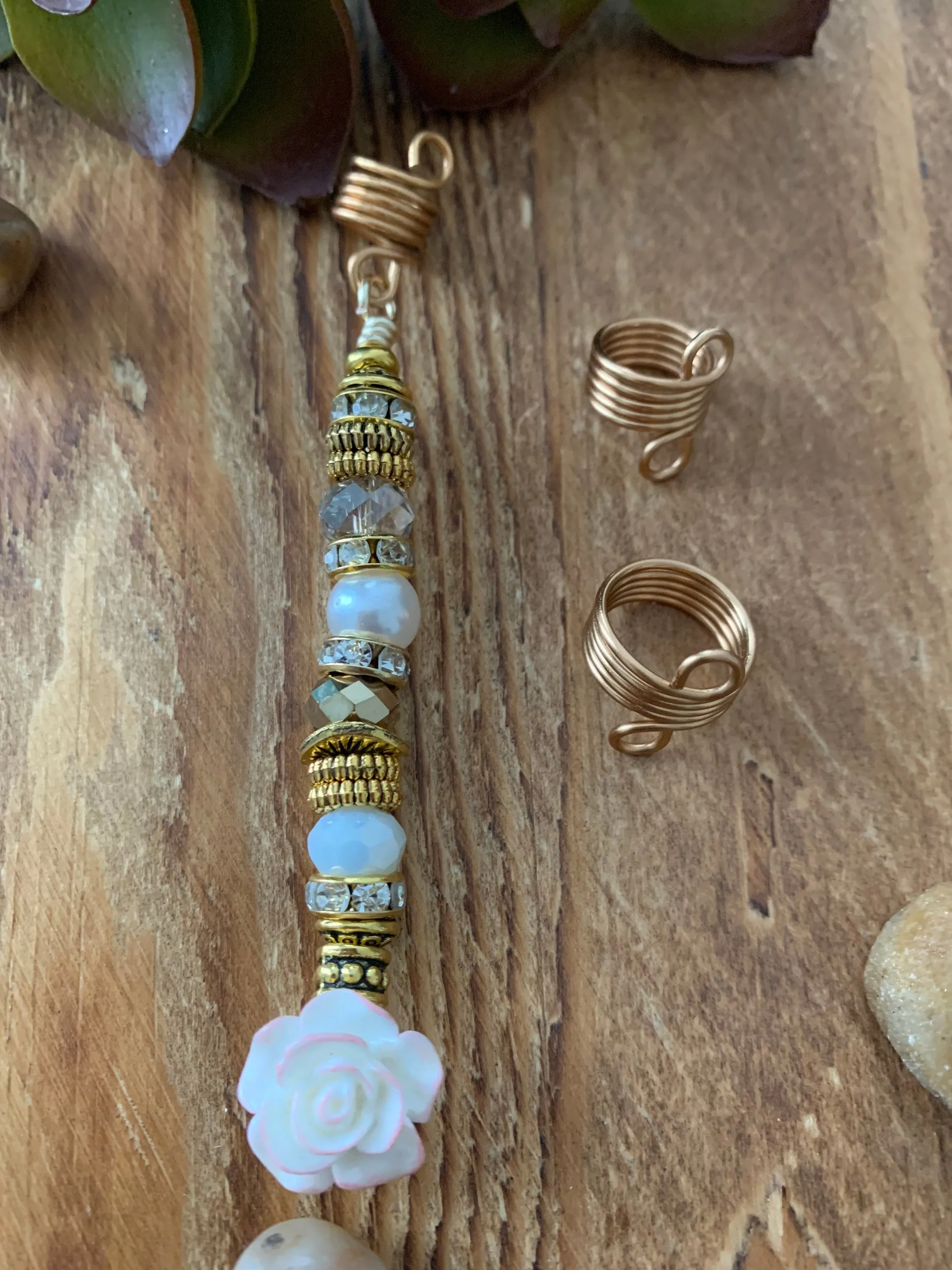
To make the style feel personal, choose one place to add detail: a single cuff near the temple, one small charm a little behind the ear, or a color that repeats something in your outfit. Keep the rest open. At a shorter length, one well-placed piece gets noticed more clearly than a crowded row of accessories.

2. Try a soft side sweep
A side sweep gives short locs movement without asking them to reach into a ponytail. Start from your preferred part, guide the front section gently toward one side, and let the remaining locs sit freely. The goal is a shift in direction, not a tightly pinned wave. If the front needs a little support, use a gentle pin or small clip placed where it will not create tension at the hairline.
This is a good choice when you want your face to feel more open or when you are dressing up a simple outfit. Look at both sides before you leave. The swept side should feel easy and the other side should still have enough shape to look intentional. A charm near the change in direction can be a beautiful focal point, especially if you want the style to catch the light when you turn your head.
3. Gather a small half-up section
When your locs have enough length to meet near the crown, a small half-up section can give you lift while leaving most of the hair free. Gather only the locs that naturally reach. Twist or fold that small group into a loose knot, short ponytail, or tucked section, then let the lower locs create the rest of the silhouette. Trying to pull every loc upward is where this style stops being comfortable.
Think of the gathered section as an accent, not an assignment for your whole head. It can be centered, slightly off to one side, or placed lower toward the back. A light piece of jewelry at the base helps make the transition between gathered and loose locs feel finished. For another version of this shape as your locs grow, see the Journal's loc ponytail ideas.
4. Build two soft mini buns
Two small buns are playful, practical, and kinder to short locs than one high, tightly pulled bun. Make a center or off-center part, then gather each side only as far as it comfortably reaches. Keep the bases broad and low enough that the style does not tug at your temples. If your locs are still too short to wrap into a bun, create two tucked sections instead. The effect is similar, but your scalp will thank you.
Because this style already has two clear shapes, the jewelry can stay simple. Match one small cuff on each side, or choose a single focal charm on the side you want to emphasize. You do not need perfect symmetry. What matters is that the two sides feel balanced when you look from the front, not that every loc follows the exact same path.

5. Frame the face with a front twist
A front twist is useful when you want a little structure around the face but do not want to pull your locs all the way back. Take a small section from one front side, guide it back along the hairline, and tuck or secure it where the locs naturally meet. Repeat on the other side only if it feels comfortable and you like the balanced look. You can also do one side for a more relaxed, asymmetrical finish.
This style works well for workdays, dinner, and any moment when you want to keep locs off your face without losing their movement. Keep the front section light. If you need to pull hard to make it stay, choose a smaller section or let it go. The best front twist reads as a quiet frame, not a tight line across the scalp.
6. Make the texture the statement
Some days, your best short loc style is simply wearing them down with confidence. Let the texture, fresh retwist, color, or natural fullness do the talking. You can create a little volume by lifting at the roots with your fingertips, switching your part, or arranging a few front locs with purpose. This option is particularly good when you are between appointments or when your locs feel too short for gathering.
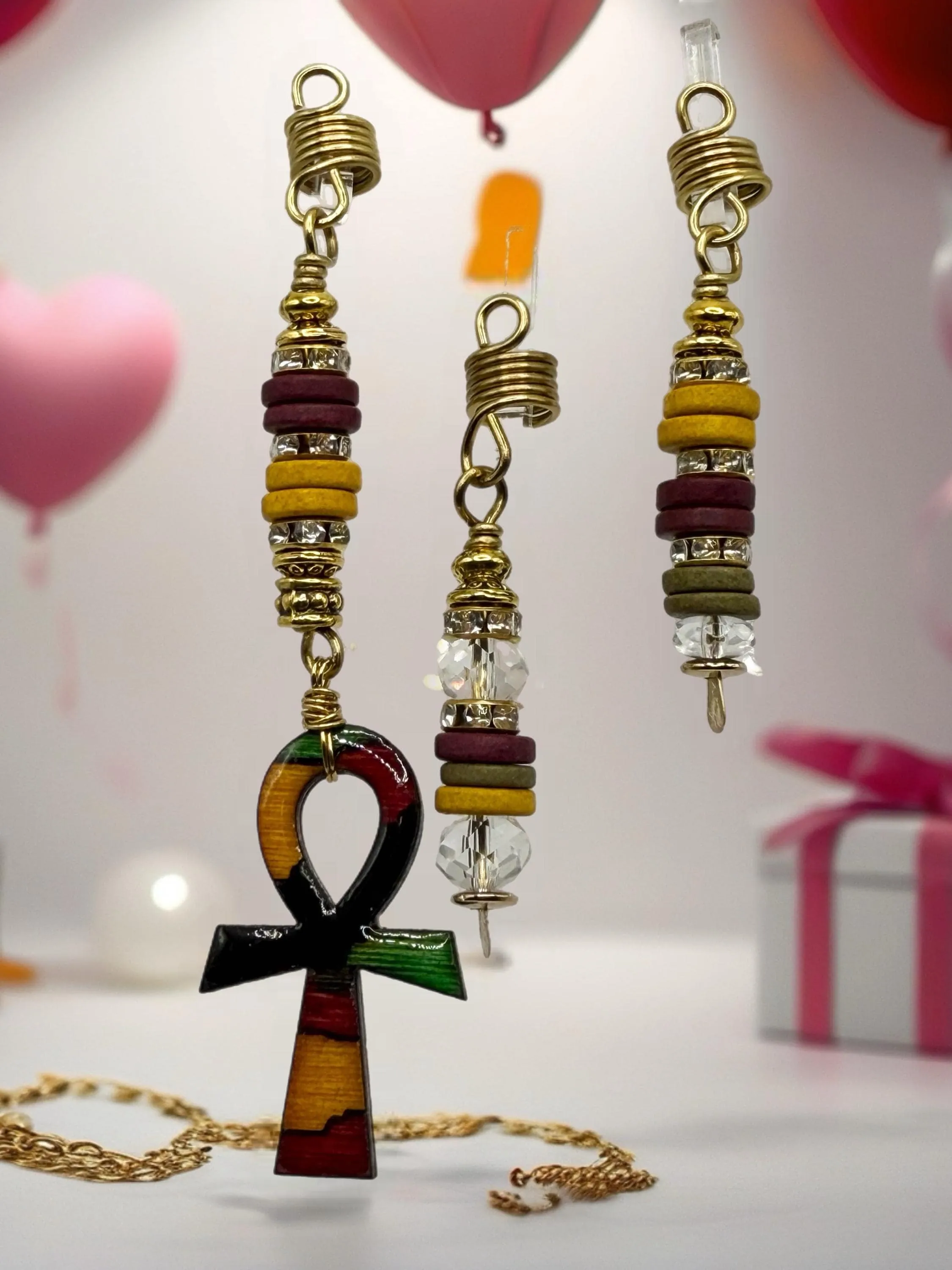
Texture-forward styling gives accessories an easy job. Choose one symbol, color, or material that feels like you, then leave room around it. A hand-painted piece can add color to a neutral outfit. A gold-tone cuff can echo your earrings. A meaningful charm can make a simple day feel more like your own. The accessory should join the style you already have, not distract from it.
Match the style to the plans you actually have
A short loc style does not need to be the same for every kind of day. For errands, a clean part or loose texture-forward look may be all you need. For work, a soft side sweep or front twist can keep your face clear without looking overdone. For dinner, a small half-up section and one meaningful charm give the style a little more presence. Choosing the style around your real plans makes it easier to get dressed without treating every morning like a special occasion.
Weather and accessories count, too. A high collar, scarf, large earrings, glasses, or headphones can change where a gathered section feels comfortable. Check those pieces before you settle on your final shape. The best style is the one that still feels like you after the commute, not the one that looked perfect for thirty seconds in the mirror.
A quick comfort check before you leave
Before you call any short loc style done, give it a short real-life test. Turn your head from side to side. Look down at your phone. Put on the jacket, scarf, headphones, or glasses you are likely to wear. If a section feels tight, shifts too easily, or catches, adjust it now. A style that only works while you stand perfectly still is not a useful everyday style.
- Start with the shape. Choose a part, sweep, or small gathered section before adding anything else.
- Keep the anchor gentle. Use the amount of hair that naturally reaches instead of stretching for a bigger look.
- Choose one focal detail. A cuff, charm, or color story can finish the style without competing with it.
- Check your movement. Comfort when you move matters more than how tight the style looks in one mirror pose.
Find a detail that works at your length
Cyere's Closet makes handmade pieces for people who want their hair to carry color, story, and character. A Dragonfly Loc Jewel can be a simple focal point for a side sweep or loose style. The Royal Roots Ankh cuffs let you repeat a small detail without covering the texture of your locs.
Browse the Loc Jewelry collection when you are ready to find a piece that suits your current length and your personal style. Short locs do not need to wait for more length to look finished. Pick a shape that feels good, keep the tension kind, and let one detail make it yours.
Frequently Asked Questions
What styles can I wear with short locs?
Short locs can look intentional with a defined part, a side sweep, a small half-up section, two soft buns, a front twist, or a simple free shape. The best choice depends on your current length, density, and how comfortably your locs gather.
Can I wear jewelry in short locs?
Yes. Start with one light piece on a stable loc, then check that it sits comfortably and does not snag. A small cuff or charm can be especially effective at short lengths because it adds detail without requiring you to pull locs into a larger shape.
How do I keep a short loc style from feeling tight?
Gather less hair, keep the anchor point close to where the locs naturally fall, and stop if your scalp feels tender. A style should stay comfortable when you turn your head, look down, and put on the outerwear you will actually wear.
Do short locs need a complicated style to look finished?
No. A clean part, a little shape, and one considered detail can be enough. Short locs already have texture and presence, so the goal is to frame that character rather than force a style made for longer hair.